Most Americans think of "pig butchering" scams as a financial crime.
An unexpected text message. A romance that turns into an investment opportunity. A fake cryptocurrency platform. Lost retirement savings.
What many people do not realize is that behind countless scam messages, there is often a human trafficking victim.
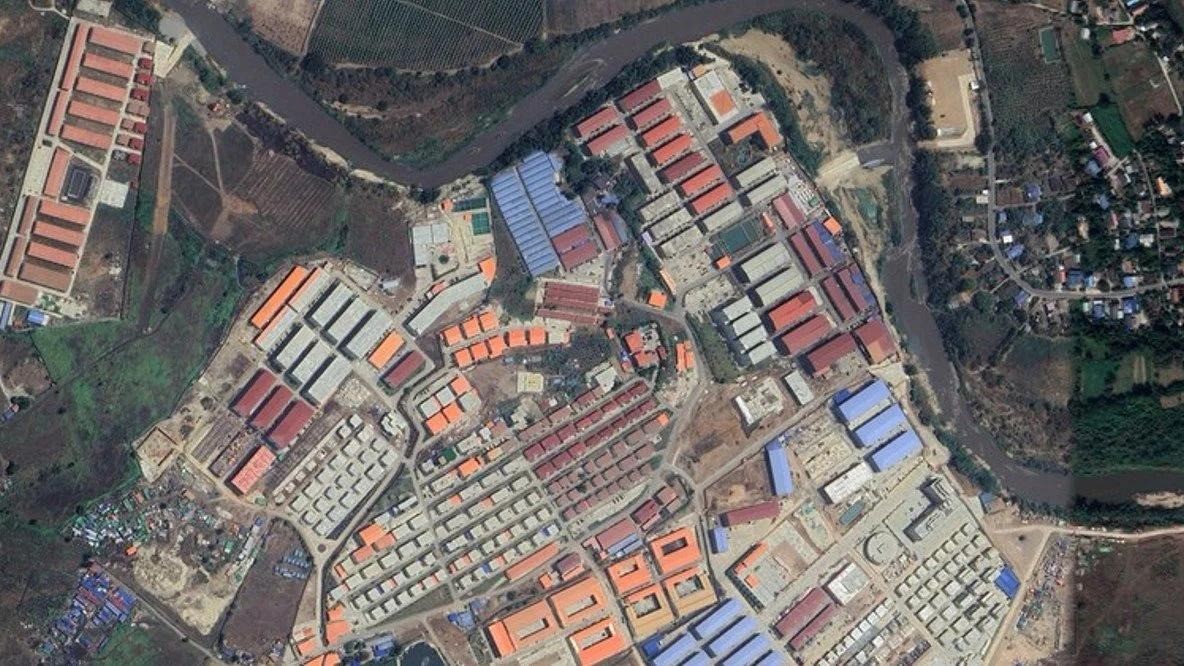
Along the Thailand-Myanmar border, particularly in Myanmar’s Karen State, vast criminal compounds have emerged over the last several years. Names such as Tai Chang, KK Park, and Shwe Kokko have become increasingly familiar to law enforcement agencies around the world. These compounds are operated by sophisticated transnational criminal organizations, most based in China, generating billions of dollars annually through online fraud. Yet the real story is not the money.
It is the people.
Thousands of individuals from across Asia, Africa, Europe, and the Americas have been recruited through fraudulent job advertisements promising legitimate employment in customer service, marketing, information technology, or sales. Upon arrival in Southeast Asia, many discover there is no job waiting for them.
Instead, passports and phones are confiscated.
They are given a bunk in a room with 6-10 other people.
Armed guards control the exits.
Victims are forced to spend twelve to eighteen hours each day conducting online fraud targeting people around the world.
Those who refuse to participate, fail to meet financial quotas, or attempt to escape reportedly face beatings, starvation, confinement, torture, or sale to other compounds and worse, organ trafficking. For many, there is no realistic way out.
For many of those Southeast Asians who can extricate themselves, whether through deceit or through a family member who purchases them back, they are no better off than they were as when they return home to countries like Malaysia and Singapore, they face prosecution and often serve 10 or more years and can receive judicial caning up to 24 strokes. Yes, they beat them so hard with a rattan cane that it often leaves permanent scarring. There is little room for leniency due to coercion or human trafficking circumstances.
None of this is speculation. There are hundreds of documented cases that fit this narrative and nearly none that do not.
The United Nations, governments throughout Southeast Asia, and law enforcement agencies worldwide have documented the existence of these compounds and the human trafficking networks supporting them. Numerous large-scale raids have resulted in the rescue of trafficking victims from facilities throughout Myanmar, Cambodia, and Laos, yet thousands remain trapped.
Importantly, not everyone inside these compounds arrived under the same circumstances. A minority are there willingly, often serving in supervisory roles and reporting back to criminal leadership.
The majority, however, initially accepted what they believed were legitimate jobs. Upon arriving in a nearby country such as Thailand, they discovered there was no employer waiting for them—only a bus and armed men. Some were trafficked from the outset, such as a 19-year-old Chinese man whose girlfriend sold him to a Myanmar scam compound for 100,000RMB. For these people, the distinction doesn’t matter because once inside, choice disappears.
When we receive one of those suspicious text messages or encounter an online scammer, it is worth remembering that the individual on the other side of the conversation may also be a victim.
That does not excuse the harm inflicted upon scam victims, many of whom lose life savings, retirement accounts, and homes. But it does complicate the narrative. This crisis is simultaneously a fraud problem, a cybersecurity problem, a national security problem, but mostly, a human trafficking problem.
Recent actions by the U.S. government, including the establishment of the Department of Justice’s Scam Center Strike Force and public actions targeting the Tai Chang compounds, represent important steps forward in the fight to combat the financial fraud. The FBI and its international partners continue to investigate these organizations and have publicly requested information from anyone with knowledge concerning Tai Chang operations.
Unfortunately, there is no action in place to help those trapped and forced to perpetrate such crimes. Public awareness remains limited which means the few (and I do mean the few) NGOs that operate in the region have limited resources.
These prisoners exist largely out of sight and, too often, out of mind.
So I would ask one thing of my professional network:
Talk about this.
Share information.
Educate employees, friends, and family members about these scams.
And finally, next time you receive that “wrong number but clearly a scam” text or encounter an obviously fake online dating match, please do one thing before you block them. Ask them one question….
“Are you there willingly”
Because there just might be someone who can help. It’s not guaranteed, but in the right circumstances, maybe- just maybe you can save a life.
The people trapped inside these compounds have very few voices.
Help me amplify them.
If you possess information regarding the Tai Chang scam compounds, please provide it to the FBI at TaiChangTIPS@fbi.gov.